
Coffee Farm Walk Moshi: What to Expect
From picking to pounding to your cup - a half-day that actually earns its place on your itinerary.

Most people hear "coffee farm" and picture a fifteen-minute pit stop somewhere between a game drive and a waterfall. You sip a cup, somebody explains the Arabica plant, and you move on. That is not what a proper coffee farm walk near Moshi is.
Done right, it is a full half-day. It has a beginning, a middle, and a meal at the end. It tells you something true about this mountain and the people who have lived on it for centuries.
This guide is for people who want to do it properly. Not as a box to tick. Not as an afterthought appended to a Kilimanjaro briefing. As its own thing, worth a morning.
01 - Why bother
This Isn't About Coffee. It's About the Chaga People.
You need to understand something before you show up at a farm gate. The Chaga - sometimes written Chagga - are not incidental to this story. They are the story. This community has farmed the southern and eastern slopes of Kilimanjaro for hundreds of years. The mountain feeds them. The volcanic soil, the altitude, the cloud cover - all of it produces conditions that are hard to replicate anywhere else.
When you walk through a Chaga farm, you are not walking through a commercial plantation. Most of these are smallholder plots. A family might tend two or three acres, growing coffee alongside banana trees, yam, beans, cassava. The coffee subsidises everything else. The banana trees shade the coffee plants. Nothing is wasted.
“Coffee here is not a monoculture. It lives inside a working farm, alongside food, alongside family, alongside everything else that keeps a household running.”
The Chaga were also among the first communities in East Africa to engage with missionaries, education, and trade - which is why Moshi became a commercial hub long before tourism arrived. Coffee was central to that economic identity. A coffee farm walk near Moshi is a way into that history. Not a surface-level one. A real one.
If you go to Materuni and it is beautiful, you should - the waterfall tends to steal the show. The coffee component becomes something you do in the last forty minutes before the matatu ride back. This guide is about making the coffee experience the point. Plan it as its own half-day, either at a farm near Mruwia or Uru, and you will get something different.
◆ Chaga culture ◆ Arabica coffee Moshi ◆ Smallholder farms ◆ Half-day experience
02 - Where to go
The Best Farms Near Moshi for a Proper Walk
Forget the farms on the main tourist circuit that have signs out front and charge in dollars by default. The best Kilimanjaro coffee tours happen on working farms in the villages above Moshi, reached by dirt road and on foot. Here are the areas worth knowing.
Mruwia Village
● Best overall - 20 min from Moshi
Less talked about than Materuni, which is exactly why it is worth going. The farms here are genuinely family-run. You are not the tenth group this week. Altitude is lower than Materuni but the coffee is still proper Arabica. The walk through the irrigation channels - old Chaga engineering - is a highlight most guides don't even mention.
Uru Village
● Quieter - good for private groups
Up above Moshi toward the mountain's western slopes. The farms here sit at a higher elevation, which means cooler mornings and slower-ripening cherries. The coffee is some of the best you will taste anywhere in Tanzania. Getting there requires a local contact - which is actually the point.
Materuni
● Most popular - go on weekdays
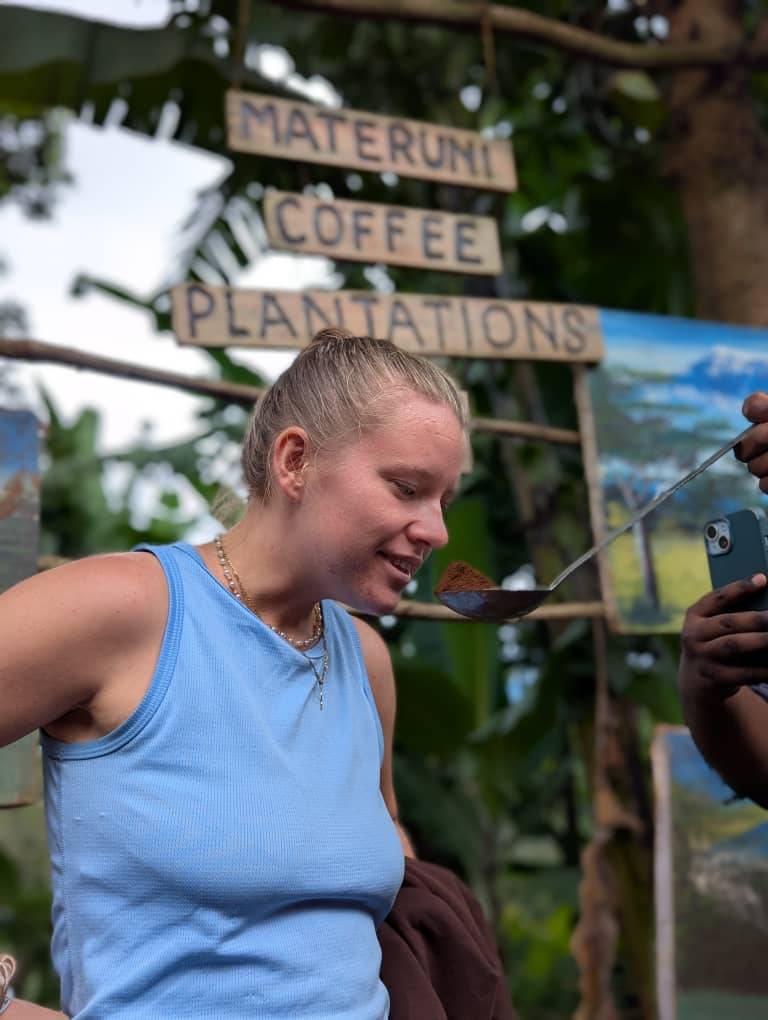
The default for most tours. It is popular for a reason - the setting is genuinely dramatic, and the waterfall gives people something to photograph. If you go here, go on a Tuesday or Wednesday morning. Avoid it on weekends when you will share the trail with five other groups doing the same thing at the same time.
Kibosho Area
● Off the radar - for the curious
West of Moshi, this is where you go if you want almost zero other tourists. Kibosho has a long Catholic mission history and some of the oldest coffee growing traditions in the region. A local guide from the village is essential - do not attempt this one by turning up without a contact.
The rule across all of them: the further you get from the main tarmac road, the better the experience. Your guide matters more than the specific farm. A good guide from the village will take you to a family that actually wants you there, not one that has turned it into a routine.
03 - The experience
What Actually Happens on the Walk
Let me walk you through it in the order it unfolds. A proper coffee farm walk near Moshi runs between three and four hours. It is not strenuous. The paths are uneven but the gradient is gentle. You do not need trekking poles. You need good shoes and a willingness to slow down.
01. The Farm Introduction
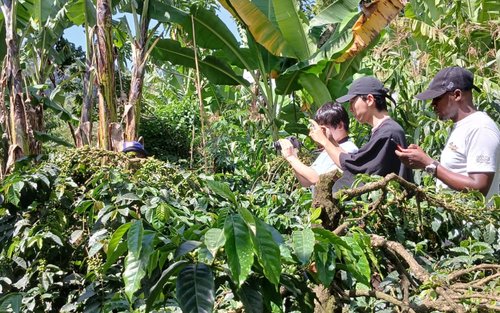
Your guide introduces you to the family or the farm owner. This is not a formality. Take a minute here. Ask a question. The relationship between a Chaga family and their land goes back generations. You are not standing in a venue - you are standing in someone's livelihood. You will notice the coffee trees are not standing alone. Banana, avocado, and other shade trees grow around them. This is intentional. The shade slows ripening and improves the bean.
02. Picking the Cherries
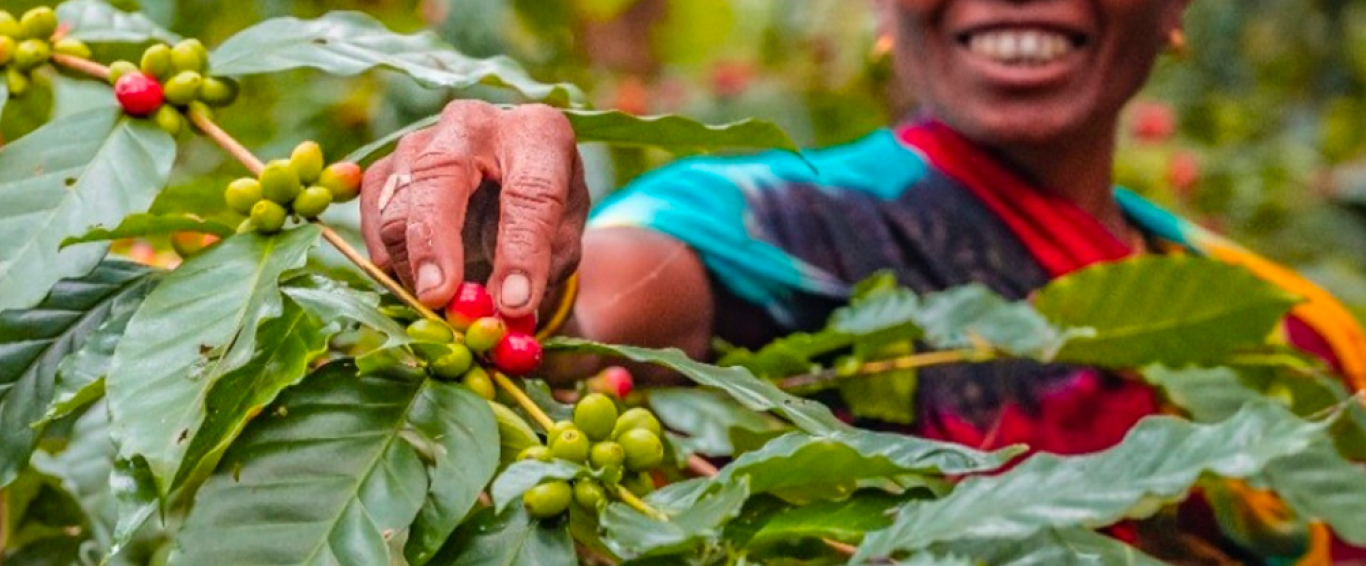
You pick by hand. Only the red cherries. Green ones stay on the branch - they are not ready. The red colour tells you the sugar content is right. You will be shown the difference. The picking itself takes twenty to thirty minutes and by the end your back will remind you that this is repetitive, physical work. The farmers do this every day during harvest season, which runs roughly October through December. That context matters when you see the price of a bag of Kilimanjaro coffee in a Moshi shop.
03. Pulping and Washing
The red skin is removed to expose the bean inside. At a farm level this is done with a hand-cranked pulping machine - the kind that has been used here for decades. You turn the handle. The cherries go in one end. Skins come out one side, wet beans the other. The beans then go into water for a day or two to ferment and remove the remaining mucilage. You won't see that part, but your guide will explain it.
04. Drying and Pounding
Dried beans still have a parchment layer. The traditional method removes it with a wooden mortar and pestle - the kind carved from a single piece of hardwood. You take turns. It is harder than it looks and funnier than you expect. The motion is circular, not straight down. The parchment cracks and lifts away. What is left is the green coffee bean, ready to roast.
05. Roasting Over Open Fire
This is the part that changes people. The beans go into a small metal pan over a wood fire. Someone stirs constantly with a long-handled spoon. The smell shifts from green and grassy to smoky and sweet to that specific brown roast smell that no synthetic fragrance has ever successfully copied. You hear the beans pop. First crack happens around eight to ten minutes. Your guide will pull the pan off at the right moment. The call is made by smell and sound, not a thermometer.
06. Grinding and Brewing
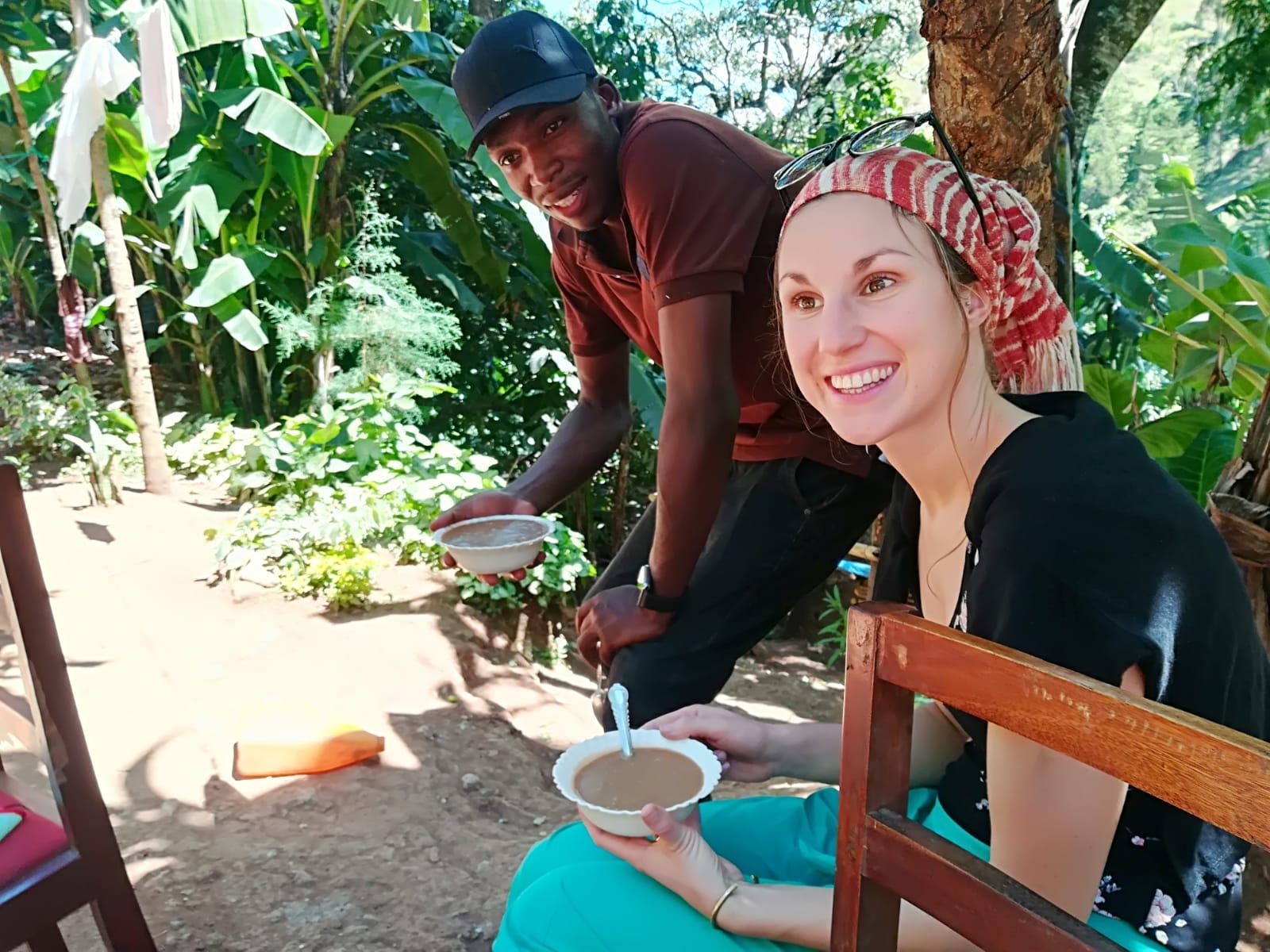
The roasted beans are pounded again - this time to a coarse grind. They go into a clay pot with water and boiled over the fire. No filter. No milk, unless you want it. No sugar, unless the host offers. The cup you receive at the end is the result of everything you just did with your own hands. That is the point. The Arabica coffee from Moshi tastes different when you know where it came from.
⚠ What to bring
Closed-toe shoes - paths are uneven with roots and stones
Light long sleeves - mornings in the highlands are cool
Small cash in Tanzanian shillings - tips are better given locally
A reusable bag if you want to buy coffee to take home
No selfie stick - seriously, leave it
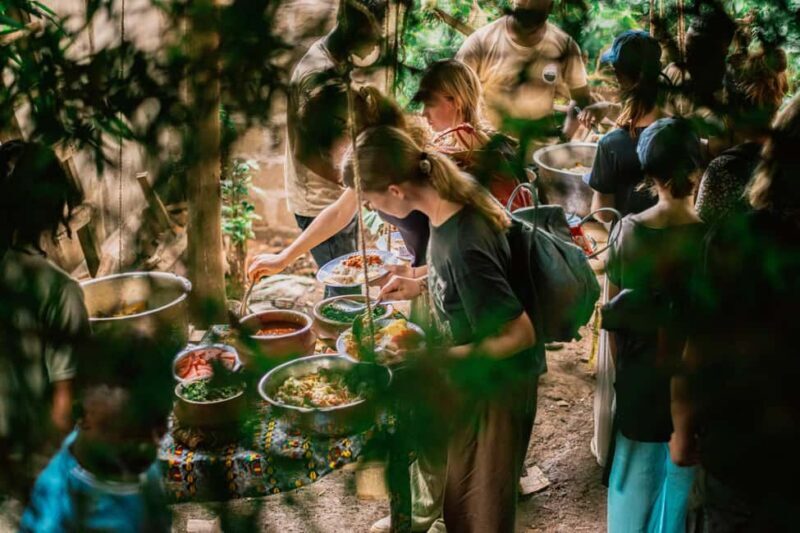
After the coffee, most farm visits include a simple lunch or snacks - bananas, maybe rice and beans, sometimes roasted maize. This is not included in every package. Ask beforehand. If it is offered, accept it.
04 - How to book
Local Guides vs. Tour Companies - Here's the Honest Answer
You have two basic routes. A local guide from the village, or a tour company based in Moshi town. Both have trade-offs.
The Local Guide Route
This is almost always the better experience. You get a smaller group, a real family, and a guide who actually grew up around coffee. The way to find them is through your guesthouse or hotel - specifically, ask the staff where they are from and whether they have family in a coffee-growing village. That is not a strange question. It is the right one. Word of mouth is how most village guides get work.
You can also ask in the Moshi market area. There are young men who work as freelance guides - some excellent, some not. Ask them directly: "Which village are you from? Have you done a coffee walk before? Can I speak to someone you have taken before?" If they cannot answer the first two questions clearly, walk on.
The Tour Company Route
The advantage is convenience. You email, pay, get picked up, come back. If you are short on time or energy for logistics, this is fine. The experience will be more polished. It will also be more rehearsed. You will share it with more people. The family at the farm will have done this routine many times this week. That does not ruin it - but you should know what you are getting.
Companies running Kilimanjaro coffee tours include operators based on the Moshi town main road and guesthouses with activities desks. Do not book from Arusha if you want a Moshi farm - the Arusha operators will add their own margin and often use the same two or three farms on repeat.
Booking Through a Guesthouse
Many of the better guesthouses in Moshi - the small locally-run ones, not the chain hotels - can organise a coffee walk directly through their network. This often gives you the best of both: logistical support with a real village contact. Ask when you check in. If they look blank, ask a different guesthouse.
05 - What it costs
The Real Price Breakdown - So You Don't Get Overcharged
This is where most travel guides go quiet. They do not want to offend operators or seem like they are undermining the tourism economy. I am going to be direct: tourists in Moshi regularly pay two to four times the fair rate for coffee walks because nobody told them what the numbers should look like.
These prices reflect what you should actually pay as of 2026. The "tourist rate" column is what you will often see quoted online or at hotel desks. The "fair rate" is what the experience is actually worth and what local visitors or informed tourists pay.
| Item | Fair Rate (USD) | Tourist Rate (USD) |
|---|---|---|
| Local freelance guide (half-day) Village guide, small group, direct booking | $25 – $35 | $45 – $65 |
| Tour company package (per person) Includes transport, guide, farm visit, coffee | $50 – $70 | $85 – $100 |
| Private car/transport from Moshi Hired boda-boda or shared dala-dala to village | $1 – $3 | $10 – $20 |
| Farm entry / family host contribution This goes directly to the host family | $4 – $8 | Bundled in |
| Tip for guide (recommended) Separate from the fee, given directly | $2 – $4 | Often forgotten |
| Coffee to take home Farm-direct, freshly roasted | $3 – $6 | $10 – $20 |
▶ How to use this table
If you book direct with a village guide: budget $40–$50 total including transport and a fair tip
If you book through a guesthouse or small local operator: $50–$70 per person is reasonable and still fair
If someone quotes you $100+ for a standard half-day coffee walk with no special additions - you are paying a Kilimanjaro trekking margin for a half-day village walk. That is too much.
One more thing: if you buy coffee to take home, buy it from the farm directly. Not from a shop in Moshi town. The farm price is lower and the money stays in the right place. A 250g bag of good single-estate Arabica coffee from Moshi should cost you 10,000 to 20,000 TZS directly from a farmer. If you see the same volume priced at $25 in a guesthouse gift shop, that should tell you something.
Ready to Walk a Real Coffee Farm?
We can connect you with a local guide in Mruwia or Uru - someone who grew up on this mountain, not someone who read about it online.