Ndoro Waterfall Moshi: 2026 Guide
Less visited than Materuni. Just as beautiful. Ndoro is the waterfall hiding in plain sight near Moshi - and for now, you can still have it almost entirely to yourself.

Quick Facts
Distance from Moshi ~18 km, 40–50 min drive
Hike duration 2.5–3 hrs round trip
Difficulty Moderate
Entry / contribution ~$3–5 USD
Guide fee ~$10–15 USD half day
Best months Mar–May, Oct–Dec
Swim possible Jun–Oct (dry season)
Crowd level Very low
Overview
There is a particular kind of frustration that comes with arriving at a waterfall and finding twenty other people already there, selfie sticks extended, tour guides doing their standard speech. Materuni is a spectacular place. It is also, increasingly, a managed experience. You show up, you hike the designated path, you see the falls, you have coffee at the village - and then you leave, exactly as the itinerary promised.
Ndoro is different. Not because it tries to be. It is simply less known, and in the world of waterfalls near Moshi, Tanzania, that gap in awareness is everything.
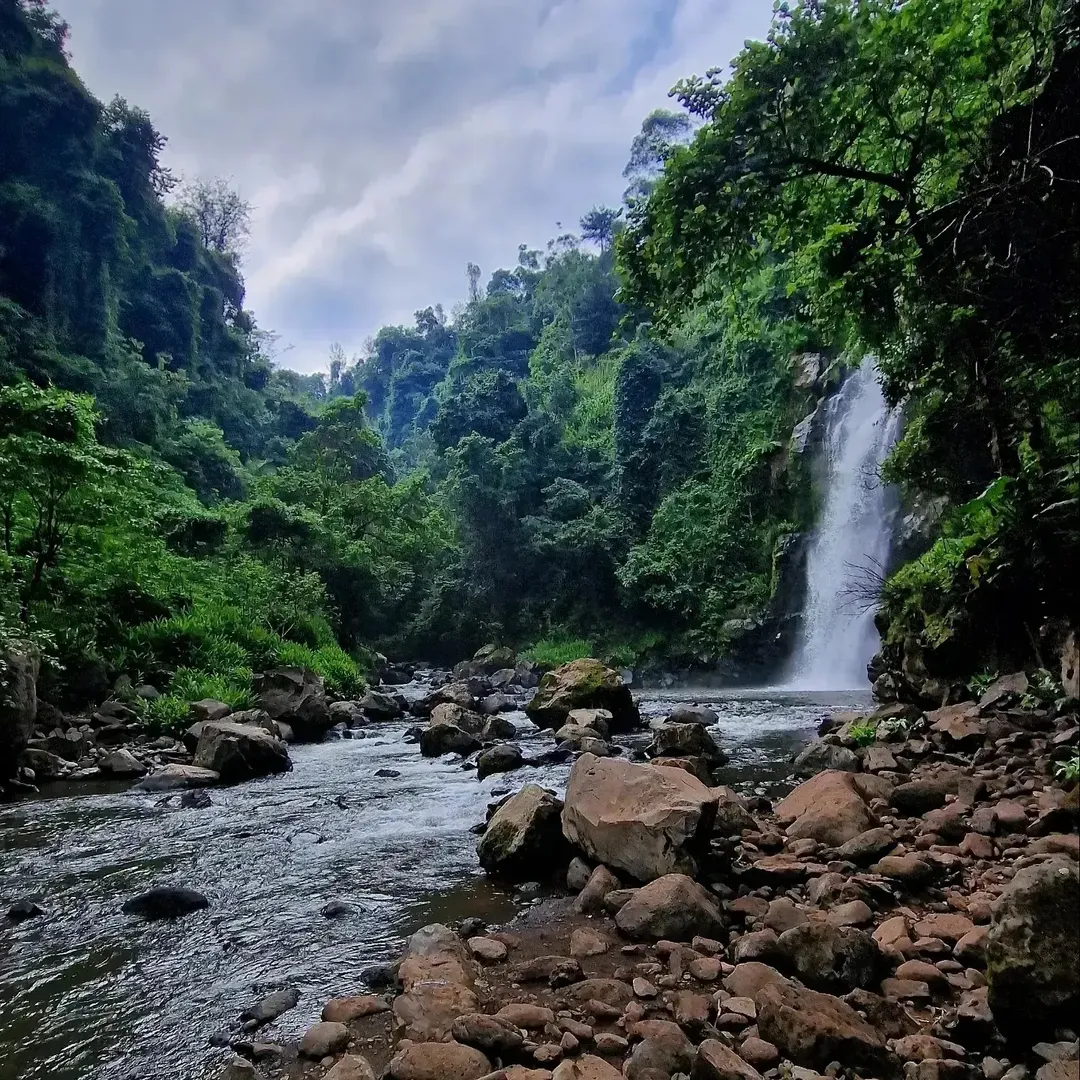
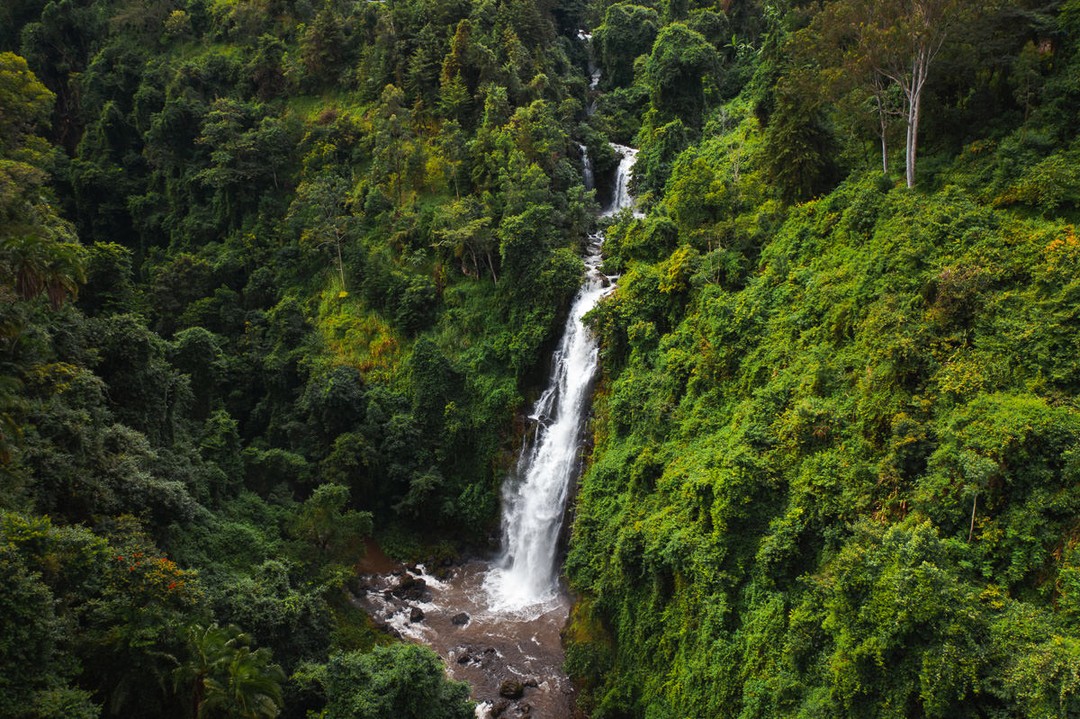
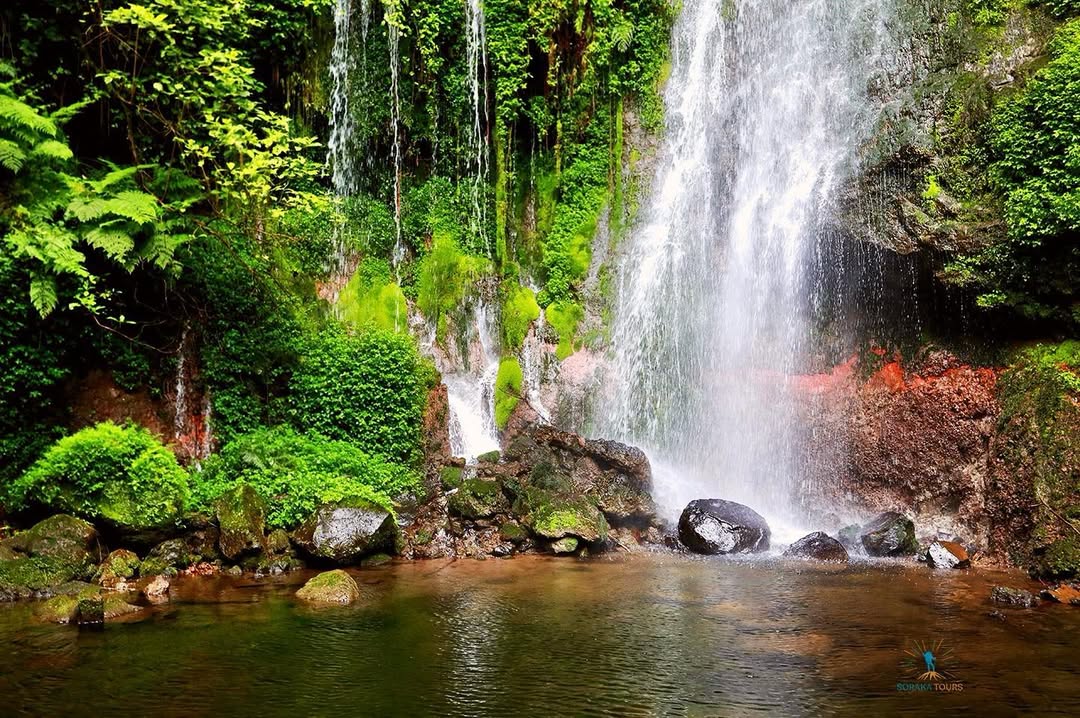
Located in the lower slopes of Kilimanjaro, the Ndoro Waterfall sits within a stretch of montane forest that most travellers pass through on their way somewhere more famous. The falls themselves drop through a narrow gorge carved by centuries of runoff from Kilimanjaro's glaciers and rains, landing in a plunge pool cool enough to make you understand why the Chagga people have always treated this mountain as something sacred. The water is clear. The air smells of wet earth and something faintly mineral. There are birds here that will stop you mid-stride.
“The gap between Materuni and Ndoro is not about beauty. It is about attention. One got written about first. The other is still waiting.”
wearetanzania.com Editorial
The lack of tourist infrastructure at Ndoro is both its challenge and its reward. You will not find a sign pointing you there from the Moshi bus station. You will not find it on the laminated day-trip menus at most hotels. What you will find, if you go, is a waterfall that still feels like it belongs to the landscape it came from - not to the tourism economy that has grown up around the mountain.
This guide is for the independent traveller who already knows Materuni exists and is specifically looking for the alternative. The one worth finding yourself.
⚡ Quick Snapshot - Ndoro Waterfall
Location Kilimanjaro Region, lower slopes above Moshi
Height Approximately 30–35 metres
Access point Village of Ndoro, ~18 km from Moshi town
Hike duration 2–3 hours round trip from the village
Difficulty Moderate — some slippery, forested sections
Entry fee Village conservation contribution (nominal, ~$5)
Crowd level Very low — you may be the only visitor
Best months March–May & October–December
How to Reach Ndoro Waterfall from Moshi
Getting to Ndoro requires a bit more intention than flagging down a dalla-dalla and hoping for the best. That friction is by design - or at least by default - and it is precisely why the falls remain relatively private.
By private vehicle or boda boda
From Moshi town, head north toward Kilimanjaro's lower slopes via the Marangu road. Before reaching Marangu itself, take the branch road that climbs toward Mwika and continue until you see signage for Ndoro village. The drive from central Moshi takes approximately 40 to 50 minutes depending on road conditions. From October through April, parts of the road become genuinely muddy. A boda boda (motorcycle taxi) from Moshi will get you there for around 10,000–15,000 TZS each way; negotiate before you get on.
By dala-dala (local bus)
Take a dala dala from Moshi's central bus stand heading toward Marangu or Mwika and ask to be dropped at the Ndoro junction. From the junction, it is a walk of roughly 2 kilometres into the village itself. Local drivers know the area - just say "Ndoro" clearly and someone will point you in the right direction. The total cost by public transport is under 3,000 TZS each way.
Hiring a local guide from the village
This is not strictly required, but it is strongly recommended and not just because the trail gets ambiguous in places. Hiring a guide from Ndoro village puts money directly into the community that maintains access to the falls. You will find guides informally at the village entrance; a half-day fee of around $10–15 USD is standard and fair. Your guide will also know which sections of the trail have become overgrown or slippery after recent rain - information that matters more than it sounds.
The Hike: What to Expect on the Trail
The hike to Ndoro Waterfall is not a stroll. It is not a brutal slog either. It sits in that middle ground that rewards people who walk with some regularity but does not require expedition fitness. Call it a strong two out of five on the difficulty scale - with the caveat that wet conditions push it to three.
From the village, the trail climbs immediately. This is Kilimanjaro's lower slope, and even here the gradient is noticeable. The path cuts through banana plantations and small agricultural plots before entering the montane forest proper, where the light shifts from open and bright to green-filtered and close. This is the part of the walk that makes the whole thing worthwhile even before you reach the falls.
The forest section - roughly forty minutes of it - passes through vegetation that most tourists on the Marangu Route to the summit never actually slow down enough to notice. Ferns the size of small trees. Strangler figs wrapped around older, host trees. The occasional colobus monkey moving through the canopy, always more heard than seen at first, then suddenly visible and then gone again.
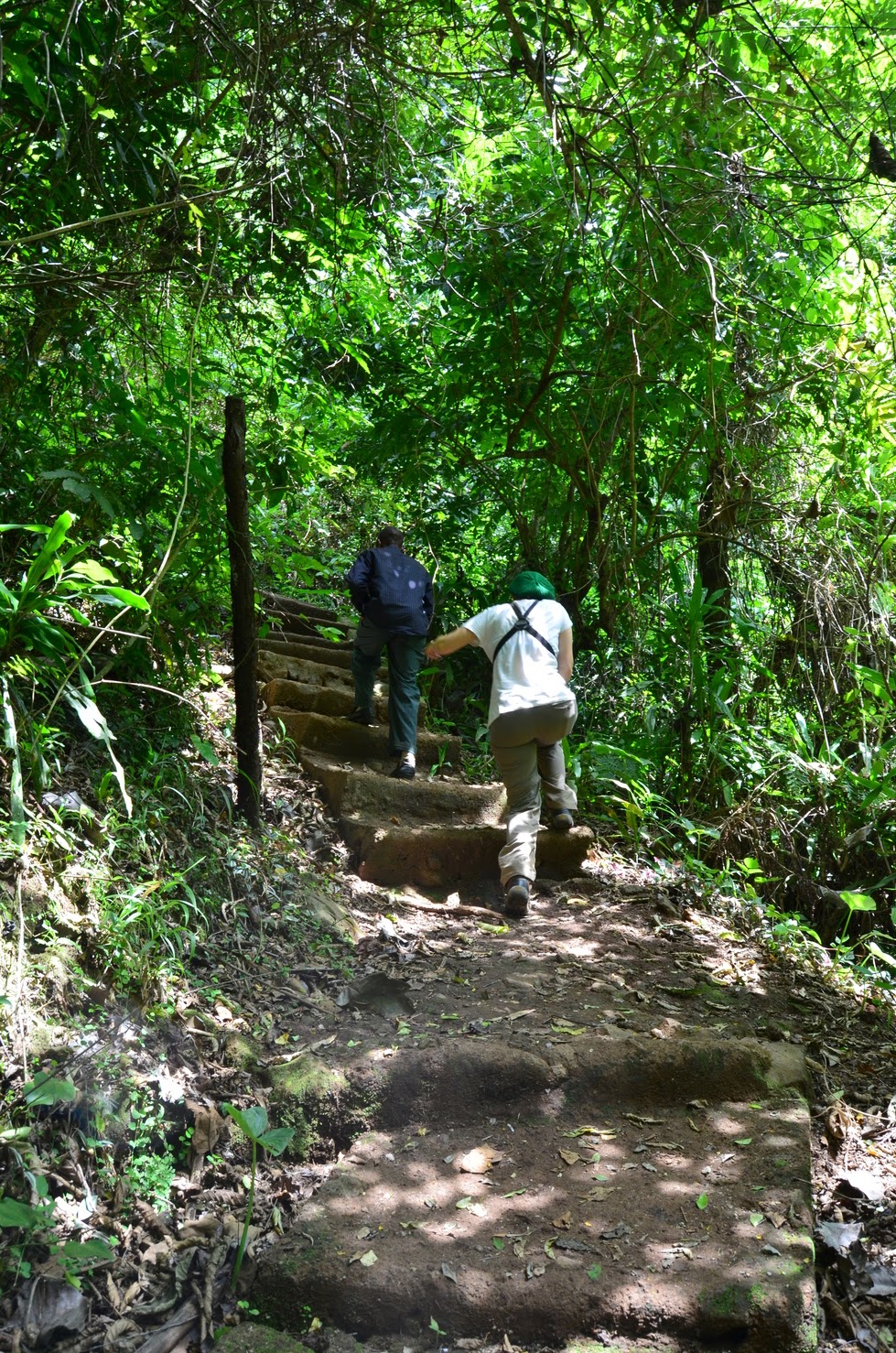
The trail becomes genuinely steep in its final third, dropping down toward the gorge. This is where footwear matters. The rock here is volcanic and does not forgive sandals or worn-out soles. Take this section slowly. The descent is rewarded quickly - you will hear the falls before you see them, a low, consistent roar that grows until the trees open up and you are standing above the plunge pool, spray already reaching you.
“You will hear the falls before you see them. That particular moment - when the sound resolves into something visual - is the reward for the climb.”
wearetanzania.com Editorial
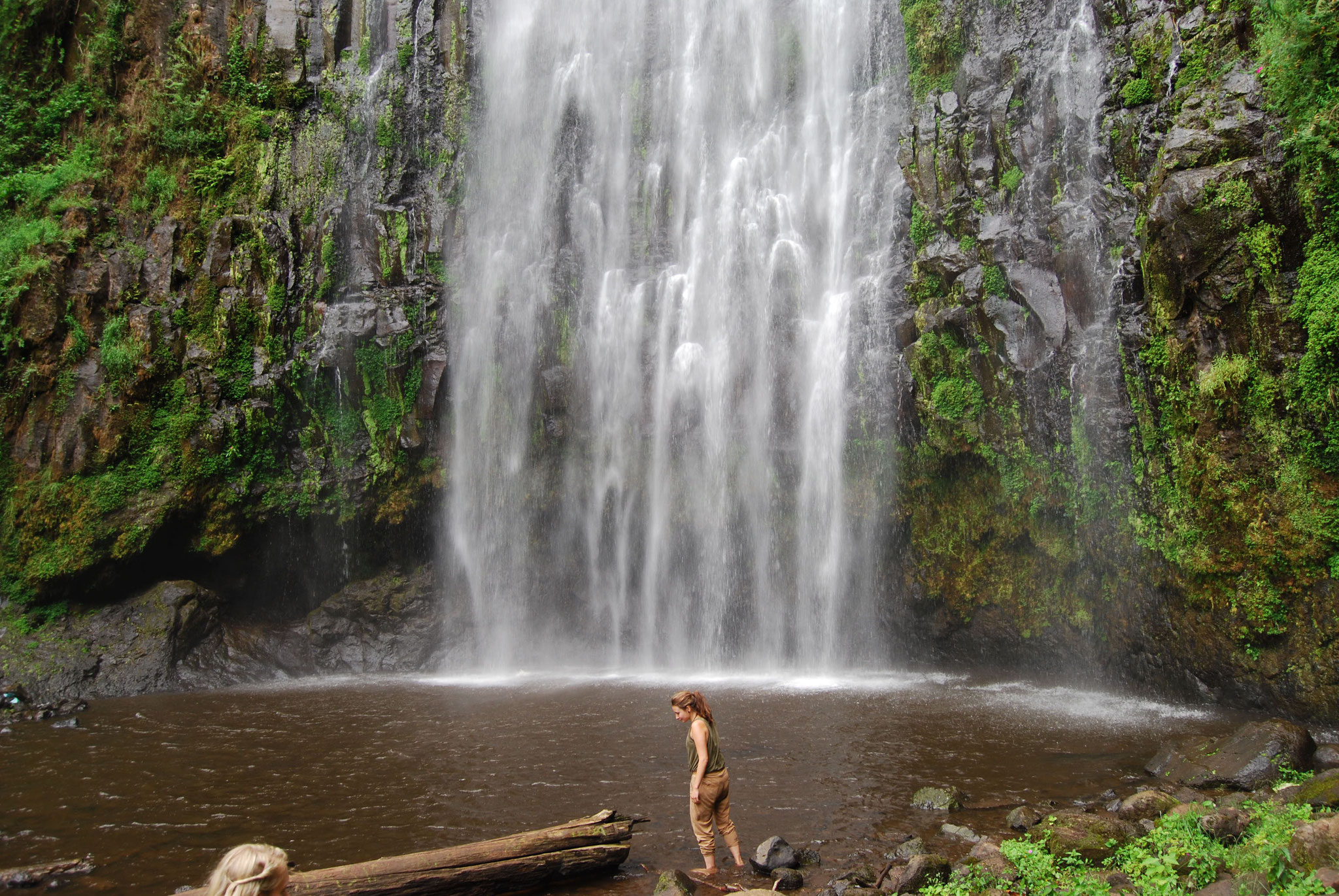
The plunge pool at the base is accessible via a short scramble down the gorge wall, assisted by tree roots and, in some places, a fixed rope left by the community.
Swimming is possible in the dry season when the current is manageable. In the wet season, the volume and force of water make it inadvisable - the pool churns visibly. Sit on the rocks instead and eat whatever you brought for lunch. There is a specific kind of quiet that lives underneath the sound of falling water, and Ndoro has it in abundance.
Return to the village is via the same trail. Allow an additional 75 minutes for the ascent back out of the gorge. Total round-trip time from village to falls and back: two and a half to three hours at a comfortable pace.
What to Bring
Ndoro has no facilities on trail. No refreshment stands, no gear rentals, no toilets past the village edge. Pack accordingly.
Hiking shoes
Waterproof if you have them. Grip is everything on wet volcanic rock.
At least 1.5L water
You cannot reliably filter from the stream on trail without preparation.
Daypack
Keep both hands free for the gorge scramble. This is non-negotiable.
Sunscreen + insect repellent
The forest canopy provides shade but not total cover. Mosquitoes exist in the undergrowth.
Packed lunch or snacks
Nothing is available on trail. Eat before you descend to the falls.
Light rain layer
Even in dry season, the forest generates its own weather by early afternoon.
Offline maps downloaded
Signal is unreliable. Download the relevant area on Maps.me or similar before leaving Moshi.
Cash in TZS
For guide fees, village contribution, and boda boda. No card readers at Ndoro.
One additional note on swimwear: if you intend to enter the plunge pool, bring a change of clothes and a small towel. The walk back from the gorge in wet gear is uncomfortable and longer than it looks on the map.
Best Season to Visit
Ndoro is visitable year-round, but the experience varies significantly with the season. The rains transform the falls dramatically - more volume, more power, more sound - but they also make the trail genuinely difficult in sections. Here is how the year breaks down.
| Period | Conditions | Falls Volume | Trail State | Verdict |
|---|---|---|---|---|
| March – May Long rains | Heavy rainfall, lush forest, dramatic skies | Peak - genuinely powerful | Slippery, some sections muddy | Best |
| June – July Cool dry | Clear, cool, excellent visibility | Moderate | Good - dry and firm | Good |
| Aug – Sep Dry season | Warmest, lowest rainfall | Lower - pool swimmable | Excellent, easiest walking | Good |
| Oct – Dec Short rains | Afternoon showers, green and vibrant | Rising - good volume | Variable - go early in the day | Best |
| January – Feb Hot dry | Dry, dusty on the lower paths | Lowest of the year | Firm, easy walking | Manageable |
The practical conclusion: if you want the falls at full voice, come between October and May. If you want the easiest hike and the chance to swim in the pool, aim for July through September. Both are legitimate. Avoid January and February if you can - the falls are underwhelming and the dust on the lower trail is unremarkable.
Start early regardless of season. The forest generates its own weather, and cloud cover typically rolls in over Kilimanjaro's lower slopes by early afternoon. A 7am departure from Moshi means you reach the falls before midday and return to the village before the light turns flat and grey.
Why This Waterfall, Why Now
The argument for Ndoro over Materuni is not that Materuni has nothing to offer. Materuni is genuinely beautiful and the community tourism model there is one of the better examples of how to do this in East Africa. The argument for Ndoro is simpler: it is still early. The crowds haven't arrived. The trail has not been widened and smoothed for maximum throughput. The village has not yet rebuilt itself around a tourist economy.
These things may change. Kilimanjaro's reputation grows every year, and the hidden waterfalls on its slopes will eventually find their way onto the mainstream itineraries. When they do, they will still be beautiful - but they will be beautiful differently. More managed. More explained. More photographed.
Right now, Ndoro is one of those places that rewards the traveller who is willing to do a small amount of work to find something real. That work is not much: a dalla-dalla, a local guide, a morning of honest hiking. What you get in return is a waterfall on Kilimanjaro that still feels like it belongs to the mountain.
Go before the signs get put up.
Planning a Moshi Day Trip?
We work with local guides and independent tour operators based in Moshi who know the Kilimanjaro foothills properly - including Ndoro and the other waterfalls the big agencies haven't listed yet. Get in touch and we'll put together a real itinerary.
Frequently Asked Questions
Is Ndoro Waterfall better than Materuni Waterfall?
They are different experiences. Materuni has established community tourism infrastructure - a proper trail, coffee tour add-ons, organised guide system. Ndoro is less developed, which means fewer facilities but also significantly fewer visitors. If solitude and a more raw experience matter to you, Ndoro wins. If you want a reliable, structured day trip with less planning required, Materuni is the easier choice. Most travellers who visit both say Ndoro feels more memorable precisely because it demands a little more.
Can you swim at Ndoro Waterfall?
Yes, in the dry season (June–October). The plunge pool is cold, clear, and deep enough to swim in when the current is low. During the long rains (March–May) the pool becomes a churning, fast-moving body of water and swimming is not safe. Even experienced swimmers should assess conditions at the pool before entering - the volume of water coming off Kilimanjaro during peak rain season is not to be underestimated.
How long does the Ndoro Waterfall hike take?
Allow two and a half to three hours for the round trip from Ndoro village to the falls and back, at a comfortable pace with stops. Add 40–50 minutes of travel each way from Moshi town. A full day out from Moshi - including travel, the hike, time at the falls, and the return journey - runs approximately seven to eight hours.
Are there other hidden waterfalls near Moshi worth visiting?
Yes. The Kilimanjaro foothills have several waterfalls that rarely appear on mainstream tour itineraries - Materuni is the most visited, Ndoro the closest to a genuine secret. There are smaller falls accessible from villages further along the Mwika road that local guides can take you to. These require more flexibility and local knowledge than a structured tour offers. For the full picture of waterfalls near Moshi, Tanzania, plan to spend at least two separate days in the foothills.